A new/old Inca Euro 260
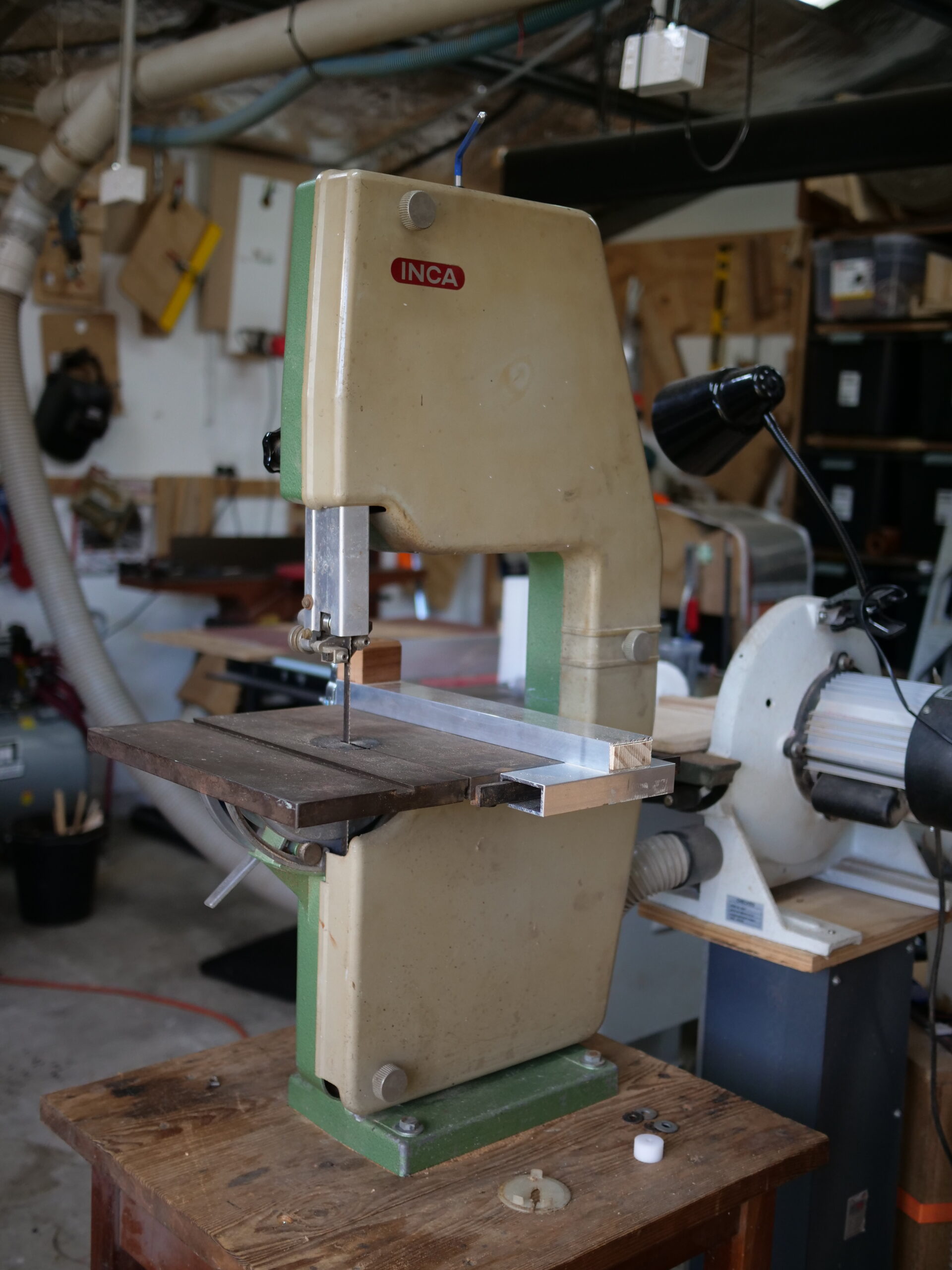
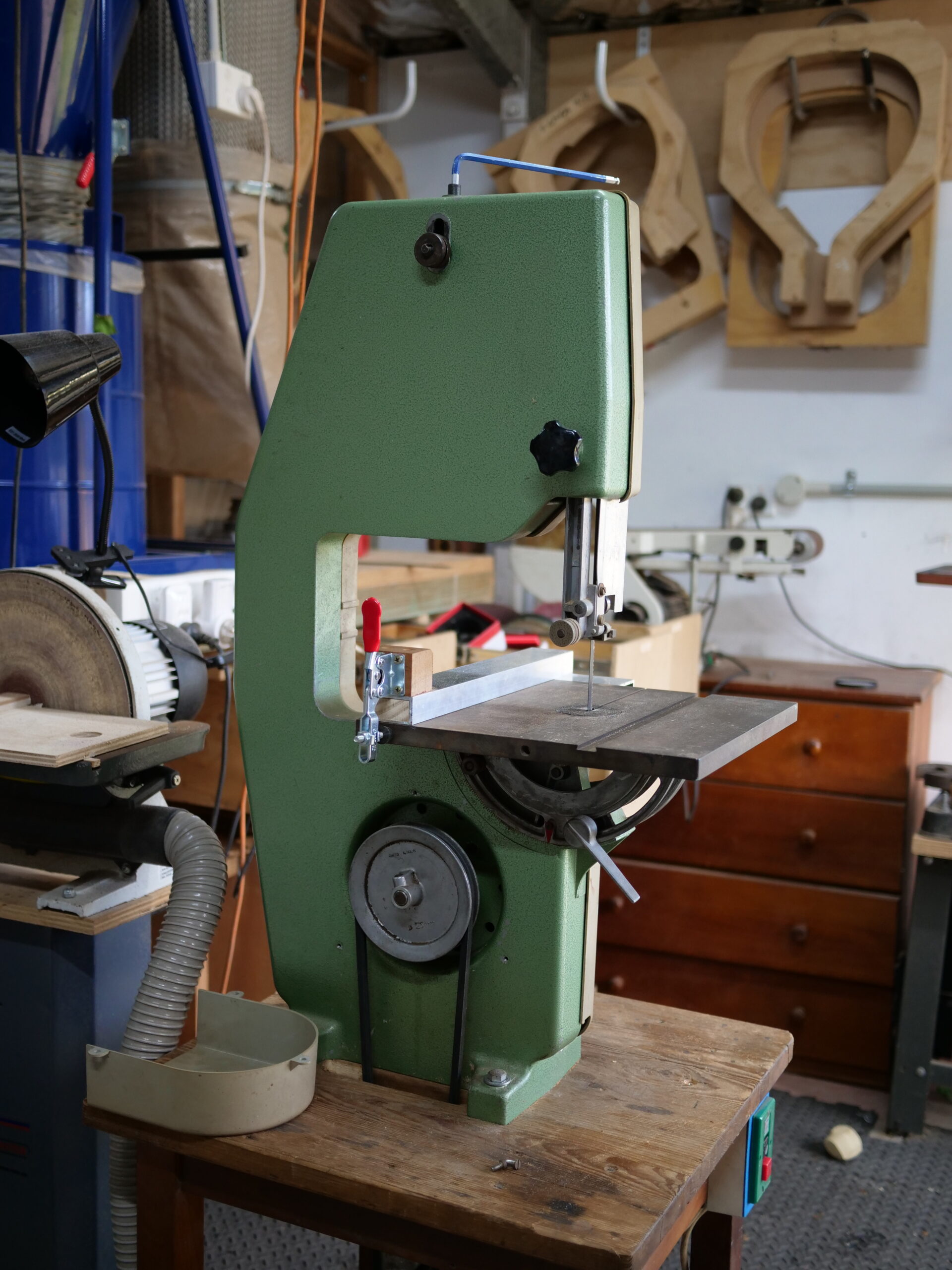
Last week I drove south into New South Wales to collect an Inca Euro 260. Six and a half hours there and back. It was a stinking hot day on the Gold Coast, 35 degrees C. So I welcomed the excuse to spend the day out the workshop, to put some distance between me and the bench and listen to a few podcasts.
I have been looking for an Inca bandsaw since I moved to Australia in 2018. In that time only three have come up for sale. Folk who have them tend to keep them. The first was beyond saving and overpriced. The second looked worn out and was in Perth. Too far. The lad who bought that one got in touch and told me about this one. This one was sound.
It is more or less the saw I used years ago in Stefan Sobell’s workshop. That one was direct drive. This one is belt driven. Both are the Euro 260. Swiss made in the seventies and eighties.
At the time I did not consider Stefan’s Inca to be anything special. It was simply the bandsaw. Four inch mahogany neck blanks went through it. Brace stock was sawn from spruce billets. Brass sheet was cut up for tailpieces. You could cut anything on it really. I assumed that was what bandsaws did.
Since opening my own shop twenty years ago I have used several modern Chinese machines. None have been as good as the Inca. I had a small black Dewalt for a while in Newcastle. It was decent. The rest have needed attention. Larger ones in particular have felt under engineered. Frames flex. Tables warp. Cuts wander. If you have to buy a Chinese bandsaw, buy the smallest one you can. They tend to be stiffer and less rubbish than the bigger ones. Unless you buy a really fancy one, but then you might as well buy a European saw then. A couple of firms are still making saws. For now.
Only after twenty years of working with crap Chinese saws did I understand how good the little Inca had been.
The Euro 260 is small. The frame is compact. The layout is familiar. It feels rigid in use. Cuts are straight. They are cast aluminium yet feel solid. I’d struggle to say why they’re so good.
But they really are.
This one needed new bearings. A new blade. A local lad 3D printed a new throat plate. The motor was realigned. I made a simple fence as the original is missing. The rest was cleaning.
The first cut brought back the memory of that workshop corner in Northumberland all those years ago. The blade moved through the timber at a steady rate. It cut in a straight line without any drift.
First time. It is good to have one again.
What I notice most is not the cut. It is walking into the workshop and seeing a familiar shape by the bench. That has been missing for a while.
Who thought I’d be getting all sentimental over a bandsaw?